Showing posts with label Cool. Show all posts

Monday, March 5, 2018

Cool Mould Produce Factory images

(Posted from China Injection Mold blog)

Check out these mould produce factory images:


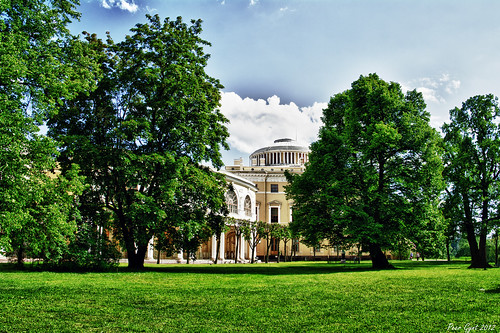
Pavlovsk Palace. Павловский Дворец.
mould produce factory
Image by Peer.Gynt
en.wikipedia.org/wiki/Pavlovsk_Palace


Pavlovsk Palace is an 18th-century Russian Imperial residence built by Paul I of Russia in Pavlovsk, near Saint Petersburg. After his death, it became the home of his widow, Maria Feodorovna. The palace and the large English garden surrounding it are now a Russian state museum and public park.

Creation


In 1777 The Empress Catherine II of Russia gave a parcel of a thousand hectares of forest along the winding Slavyanka River, four kilometers from her residence at Tsarskoye Selo, to her son and heir Paul I and his wife Maria Feodorovna, to celebrate the birth of their first son, the future Alexander I of Russia.

At the time the land was given to Paul and Maria Feodorovna, there were two rustic log lodges in the called ‘Krik’ and ‘Krak.’ Paul and his wife spent the summers of 1777 to 1780 in Krik, while their new homes and the garden were being built.[1]

They began by building two wooden buildings, one kilometer apart. Paul’s house, a two-story house in the Dutch style, with small gardens, was called "Marienthal", or the "Valley of Maria." Maria’s house was a small wooden house with a cupola, flower beds, named "Paullust", or "Paul’s Joy." Paul and Maria Feodorovna began to create picturesque "ruins", a Chinese kiosk, Chinese bridges and classical temples in the English landscape garden style which had spread rapidly across Europe in the second half of the 18th century.[2]

In 1780, Catherine the Great loaned her official architect, the Scotsman Charles Cameron, to design a palace on a hillside overlooking the Slavyanka River, near the site of Marienthal.

Cameron had studied under English architect Isaac Ware, who was close to the architect of Chiswick House, the villa of Lord Burlington one of the earliest and finest Palladian houses in England. Through this connection Cameron became familiar with the original plans of Palladio, which were in the personal collection of Lord Burlington. This style was the major influence on Cameron when he designed Pavlovsk.[3]

Cameron began his project not with the palace itself but with two classical pavilions. The first was the Temple of Friendship, a circular Dorian temple with sixteen columns supporting a low dome, containing a statute of Catherine the Great. It was placed at a bend of the Slavyanka River, below the future palace, and was surrounded by silver poplars and transplanted Siberian pines. The second was the Apollo Colonnade, a double row of columns with an entablature, forming a setting for a reproduction of a reproduction of the Belvedere Apollo. It was placed at the entrance of the park, and it was made of porous limestone with a coarse finish the surfaces to suggest that they had been aged by centuries of weather. At the same time the Slavyanka River was dammed, to create a lake which would mirror the facade of the palace above.[4]

Maria Feodorovna also insisted in having several rustic structures which recalled the palace where she grew up at Étupes, forty miles from Basel, in what was then the Duchy of Württemberg and today is in Alsace. Cameron constructed a small Swiss chalet with a library; a dairy of rough stones with a thatched roof, where milk products were kept and prepared, and an aviary in the form of a small classical temple with metal netting between the Dorian columns, which was filled with nightingale, goldfinch, starling and quail.

For the palace itself, Cameron conceived a country house which seems to have been based on a design of Palladio shown in a woodcut in his book Quattro libri dell’architectura, for the Villa Tressino at Meledo in Italy. This same drawing was later used by Thomas Jefferson in his design for the University of Virginia. The palace he designed had a cube-shaped central block three stories high with a low dome supported by sixty-four columns. On either side of the building were two single story colonnades of curved open winged galleries connected to service buildings one and a half stories high. Each facade of the palace was decorated with molded friezes and reliefs.[5]

In September 1781, as construction of the Pavlovsk Palace began, Paul and Maria set off on a journey to Austria, Italy, France and Germany. They traveled under the incognito of "The Count and Countess of the North". During their travels they saw the palaces and French gardens of Versailles and Chantilly, which strongly influenced the future appearance of Pavlovsk Park. King Louis XVI presented them with four Gobelins tapestries, Marie Antoinette presented Maria Feodorovna with a sixty-piece toilet set of Sèvres porcelain, and they ordered more sets of porcelain and purchased statues, busts, paintings, furniture and paintings, all for Pavlovsk. While they traveled, they kept in contact almost daily with Kuchelbecker, the supervisor of construction at Pavlovsk, sending back and forth drawings, plans and notes on the smallest details.[6]

Paul and Maria Feodorovna returned in November 1782, and they continued to fill Pavlovsk with art objects. A shipment of antique marbles, statues, busts, urns, and pottery discovered and purchased at Pompei, arrived in 1783. Sixteen sets of furniture, over two hundred pieces, were ordered from Paris between 1783 and 1785 for the State Rooms. In 1784, twelve Hubert Robert landscapes were commissioned for Pavlovsk. The couple purchased ninety-six clocks from Europe. The Imperial Glass factory, made special chandeliers for each room.

In the midst of the construction, and tensions grew between her and Cameron; Cameron was used to the unlimited budget for materials given him by Catherine the Great, while Catherine gave very little money to Paul; and Cameron was annoyed by the furniture, tapestries and fireplaces brought back from Europe by Maria Feodorovna without consulting him. Maria Feodorovna in turn was annoyed by the bright polychrome decoration and Pompeian arabesques used by Cameron, and wanted more delicate colors, and Paul did not like anything that resembled the style of his mother’s house, the Catherine Palace at Tsarskoye Selo.

The tensions led to a parting in 1786. Cameron left to build a new palace for Catherine in the Crimea. He had finished entry vestibule and the five rooms of the private apartments. The work of decorating the interior was taken over by an Italian architect, Vincenzio Brenna, from Florence, who had come to Russia in 1783. Brenna designed interiors which reflected Paul’s taste for Roman classicism. He created the white and gold Halls of War and Peace, on either side of the Greek Hall by Cameron, which had a colonnade of green false marble columns, resembling a Greek temple. He made the Italian hall into a replica of a Roman temple, and he built the State Bedroom for Maria Feodorovna as an imitation of the state bedroom of the King of France, with a huge gilded bed, and cream silk wallpaper painted in tempura with colorful flowers, fruit, musical instruments and gardening tools.[6]

Catherine the Great died in 1796, and Paul became Emperor. He decided to enlarge Pavlovsk into a palace suitable for a royal residence, adding two new wings on either side of the main building, and a church attached to the south wing. Between 1797 and 1799, he lavished money and the finest materials on Brenna’s interiors.

The reign of Emperor Paul did not last long. He alienated the nobles, and became increasingly fearful of conspiracies. His fears were justified; the Emperor Paul was murdered by members of his court in 1801, and his son Alexander became Emperor. Pavlovsk Palace became the residence of the Empress Maria Feodorovna (1759–1828), the mother of both Emperor Alexander I of Russia and Emperor Nicholas I of Russia. She turned the house into a memorial to her murdered husband, filled with his furniture and portraits, and made the house a showcase for finest 18th century French furnishings, paintings, sculpture and porcelain.

Another disaster struck Pavlovsk in 1803; a fire caused by a defective chimney destroyed a major part of the interior of the palace, including all the decor of the State Apartments and living rooms. Most of the furniture was saved, along with some door panels, fireplaces and mirrors, but most of the Palace had to be rebuilt.

Maria Feodorovna brought Cameron and Brenna’s young assistant, the Italian architect Carlo Rossi, to help restore the Palace. She also employed a Russian architect, Andrei Voronykhin, who had been born a serf, and was trained in decoration and design, who rose to become the architect of Kazan Cathedral in St. Petersburg. Voronykhin was named chief architect of Pavlovsk by Maria Feodorovna. He brought back the architect Quarenghi, who had redecorated five rooms on the main floor, to recreate his work. He remade some of the rooms, such as the Tapestry Room and the State Bedroom, exactly as they had been, but for other rooms he added decoration inspired by Roman models discovered at Pompeii and Herculaneum; Roman-style lamps, furniture, Roman couches, and chairs copied after those of Roman senators. Following the French taste of the time for Egyptian art, he added black Egyptian statues in the entry vestibule of the Palace, He also redesigned the Greek and Italian halls, replacing the molding on the walls with false marble, and he added a Russian touch; fireplaces faced with Russian lapis-lazuli and jasper, which had originally been in the Mikhailovsky Palace that Paul had built in St. Petersburg. Voronykhin also made plans for a semi-circular library in one of the wings, which was later built by Carlo Rossi, and he redesigned the private apartments of Maria Feodorovna on the ground floor, which included a library, boudoir and bedroom. He installed French doors and large windows in the apartment, so the flower garden outside seemed to be part of the interior.[7]

In 1805 Voronykhin built the Centaur bridge in the park, and the Visconti bridge, which crossed the Slavyanka at a point it was filled with water lilies. His last construction in the park was the Rose Pavilion, built in 1811, a simple structure surrounded entirely by rosebushes. The Rose Pavilion was the site of a grand fete on July 12, 1814, celebrating the return of Alexander I to St. Petersburg after the defeat of Napoleon. For the occasion the architect Pietro de Gottardo Gonzaga built a ballroom the size of the Rose Pavilion itself in just seventeen days, and surrounded it with huge canvases of Russian villagers celebrating the victory. The ball inside the pavilion opened with a Polonaise led by Alexander and his mother, and ended with a huge display of fireworks.

In her later years Maria Feodorovna had a literary salon at Pavlovsk, which was frequented by the poet Vasily Zhukovsky, the fable writer Ivan Krylov, and the historian Nikolai Karamzin.

The last great St. Petersburg architect to work at Pavlovsk was Carlo Rossi, who in 1824 designed the library, which contained more than twenty thousand books as well as collections of rare coins and butterflies. He also designed the Corner Salon, where Maria Feodorovna received guests such as the first American Ambassador to Russia, John Quincy Adams, and the Lavender Room, whose walls were made of lilac-colored false marble, matching the lilac flowers outside the windows. These rooms were furnished with furniture made of native Russian woods, including Karelian birch, poplar and walnut.[8]

Maria Feodorovna died on October 24, 1828, fourteen days after her sixty-seventh birthday. She left the house to her younger son, Michael, and specified that none of the furniture should be taken away. After Michael’s death, it went to the second son of Nicholas I, Constantine Nikolayevich. It then passed to his widow and then their eldest son, Constantine Constantinovich. Her descendants respected the will, and turned the house into a family museum, just as it was when she died.

After the Russian Revolution


At the time of the Russian Revolution in 1917, the eldest son of Constantine Constantinovich, Prince Jean, along with his wife Helen, the daughter of the King of Serbia, and the sister of Constantine, Queen Olga of Greece, were living in one of the wings of Pavlovsk. As the political situation deteriorated, they left, and the house was left to the care of Alexander Polovotsoff, director of the Art Institute and the Museum of Applied Arts in St. Petersburg, When Lenin and the Bolsheviks seized power in November 1917, Polovtsoff went to the Winter Palace, found Anatoly Lunacharsky, the Commissar of Enlightenment of the new government, and demanded that Pavlovsk be saved as a museum. Lunacharsky agreed and named him Commissar Curator of Pavlovsk. He returned to the Palace and found that a group of revolutionary sailors had searched the Palace for weapons and taken a few sabers, but otherwise everything was in its place. He hired former soldiers to guard the house, put all the furniture into the main building, made an inventory of all the treasures in the Palace, and successfully resisted demands from various revolutionary committees for dishes, chairs, tables, and all the books from the library. He was able to persuade Lunacharsky himself to come to Pavlovsk, After Lunacharsky’s visit, Pavlovsk was officially confiscated, but turned into a museum, open to the public two or three days a week. Having succeeded in saving the Palace, Polovtsoff took family and belongings and slipped across the border to Finland and moved to Paris.

World War II


The German attack on the Soviet Union in June 1941 and the swiftness of the German advance took the Soviet government by surprise. The morning after the attack, the curators of Pavlovsk, under the direction of museum curator Anatoliy Kuchumov, began to pack as many of art objects as possible, starting with the Sèvres porcelain toilet set given by Louis XVI to Maria Feodorovna and Paul in 1780. Ninety-six hours after the announcement of the beginning of the war, the first thirty-four crates were being carried from the palace by horse-drawn cart. Boards were put over the windows, and sand on the floor of the Palace. The thirty curators often worked by candlelight, and by July there were air raids. The paintings, chandeliers, crystal, porcelain, rare furniture, and works of ivory and amber were packed and sent first. They worked with great care – each piece of furniture had to be carefully dismantled, porcelain vases had to be separated from the bases, and delicate clocks had to have their casing and mechanisms separated and packed separately, with diagrams on how to put them back together. One piece of each set of furniture was saved, and the others left behind. The Roman and Greek antiquities were too heavy and delicate to move, so they were taken to the basements, placed as close together as possible, and then hidden by a brick wall.

By the third week of August thirteen thousand objects, plus all the documentation, had been packed and sent away. Some crates were sent to Gorky, others to Sarapul, and the last group, on August 20, 1941, went to Leningrad, where the crates were stored in the basement of St. Isaac’s Cathedral. The last shipment included the chandelier from the Italian Hall and the jasper vases from the Greek Hall. On August 30, the last rail link from Leningrad to Moscow was cut, and the city was under blockade. By August 28 the Germans were fifty kilometers from Pavlovsk. A Soviet division headquarters was located in one wing of the palace,

As the Germans came closer, the park and Palace came under bombardment. The museum staff began to bury the statues which were too heavy to evacuate. They calculated that the Germans would not dig deeper than one meter eighty centimeters, so they buried all the statues as deep as three meters. The statues of the Three Graces were buried three meters beneath the private garden of Maria Feodorovna. Their calculations were correct; the statues were still there after the war. On September 16, the last soldiers left, and the Germans occupied Pavlovsk Palace, which was still occupied by a group of elderly women guardians.

The Germans occupied Pavlovsk palace for two and a half years. Officers were quartered in the salons on the first floor, and the ballroom was made into a garage for cars and motorcycles. Barracks were located in the north wing and a hospital in the south wing. German soldiers, Dutch soldiers and Spanish soldiers in special units of the German army occupied the buildings in the Park. The sculpture and furniture that remained in the house and all the books of the Rossi Library were taken to Germany. The statue of Emperor Paul in the courtyard was used as a telephone pole. Fortunately the Germans did not discover the antiquities hidden behind the brick wall in the basement.

Pavlovsk was liberated on January 24, 1944. When the Soviet troops arrived, the Palace had already been burning for three days. The main building of the Palace was a hollow shell, without a roof or floors. The north wall had fallen. Most of the parquet floors of the palace had been used as firewood; a few pieces were found in unburned portions of the palace near the stoves. Of the over one hundred thousand trees that had been in the park before the War, seventy thousand had been cut down or destroyed by the shelling. All the decorative bridges in the park had been blown up. Eight hundred bunkers had been dug in the park. The Rose Pavilion was gone; the Germans had used the materials to construct a fortified dugout.

Restoration


On February 18, 1944, a meeting was held at the House of Architects in Leningrad to discuss the fate of the ruined Palaces. The academician and architect Aleksei Shchusev, who had designed the Lenin Mausoleum, called for the immediate reconstruction of the Palaces. "If we do not do this", he said, "we who know and remember these palaces in all their glory as they were, then the next generation will never be able to reconstruct them." [11] Even before the war had ended, the Soviet government decided to restore Pavlovsk and the other ruined palaces around Leningrad.

First the mines had to be cleared from the ruins and palace and the park. Then the remaining walls were supported with scaffolding, and casts were made of the remaining molding. Fragments of plaster molding were collected, sorting, and casts made. The color of paint still on the remaining walls was carefully noted for later copying. Photographs and early plans of the palace were brought together to help with the restoration.

As soon as the war ended, a search began for treasures stolen from the Palace. Curators collected pieces of furniture, fabric, the legs of tables and pieces of doors and gilded cornices from the German fortifications around the Palace. In the buildings which had been German headquarters, they found chairs, marble statues and rolled-up paintings from the Palace. They found other furniture and objects as far away as Riga, Tallinn, and in Konigsberg, in Germany.

Some precious objects from Pavlovsk left Russia even before the war. Four Gobelins tapestries from Pavlovsk were sold by the Soviet Government to J. Paul Getty, and are now on display in the Getty Museum in Malibu, California.[12]

The restorers used only the original variants of the architectural decoration; those created by Cameron, Brenna, Voronykhin, and Rossi. The only changes permitted were to use modern materials. Columns made of wood were replaced by poured concrete or bricks, and the ceilings of the Italian and Greek Halls were made of steel and concrete so they would be fireproof.

A special school, the Mukhina Leningrad Higher Artistic Industry School, was created in Leningrad to teach the arts of restoring architectural details, furniture, and art objects. This school produced a corps of restoration experts who worked on all the palaces around Leningrad.

The work was meticulous and difficult, and proceeded very slowly. In 1950, after six years of planting new trees, parts of the Park opened to the public. In 1955, the restoration of the facade of the Palace was completed, and restoration of the interiors began.

Fortunately for the restorers, the original plans by Cameron, Brenna, Voronykhin and Rossi still existed. Also, fragments of the original interior molding, cornices, friezes and the frames for the carvings, bas-reliefs, medallions and paintings still remained, and could be copied. In addition, there were twenty-five hundred photographic negatives taken in the early century by Benois, and another eleven thousand photographs taken just before the war.[12]

The chief of the restoration, Feodor Oleinik, was insistent that all the restoration be faithful to the original work: "Pay attention and do not use later details", he demanded. "Only the original variant, only that done by Cameron, Brenna, Vornykhin, or Rossi." Old techniques of artisans of the 18th century, such as painting false marble and gilding furniture, had to be relearned and applied. A silk workshop was opened in Moscow to recreate the original woven fabrics for wall coverings and upholstery, copying the texture, color and thread counts of the originals. In forty rooms of the Palace, painted decoration on the walls and ceilings had to be precisely recreated in the original colors and designs. A Master painter and six helpers recreated the original trompe l’oeil ceilings and wall paintings.[13]

Once the interior walls and decoration had been exactly recreated, the next step was the furnishings. The twelve thousand pieces of furniture and art objects removed from their original places, from paintings and tapestries to water pitchers and glasses, had to be put back where they belonged. Furniture, doors, and parquet floors of many different colors of wood which had been burned or stolen were remade exactly like the originals. The crystal chandeliers of the 18th century were exactly copied.

In 1957, thirteen years after the Palace had been burned, the first seven rooms were opened to the public. In 1958, four more rooms were opened, and eleven more in 1960. The Egyptian Vestibule was finished in 1963, and the Italian Room opened in 1965. Eleven more rooms were ready by 1967. By 1977, on the 200th anniversary of the beginning of the Palace, fifty rooms were finished, and the Palace looked again as it had in the time of Maria Feodorovna.


Read more about Cool Mould Produce Factory images

Sunday, February 25, 2018

Cool Mould Manufacturing Factory images

(Posted from China Injection Mold blog)

A few nice mould manufacturing factory images I found:


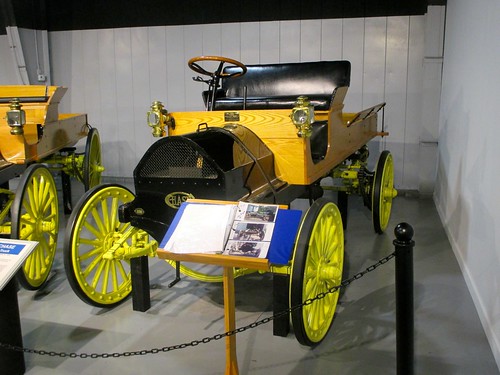
1910 Chase Model D Truck
mould manufacturing factory
Image by pecooper98362

Guaranteed by the manufacturer to be free of all defects for 1 year

Engine: Air-cooled; 2 cycle – 3 cylinder, 20 hp

Factory Price: ,000; manufactured in Syracuse, NY


This truck started its life as a fire truck in Almond, NY. However, its career was short-lived when the village experienced a bad fire and it fails to start. The village fathers went back to their horse-drawn pumper, and used it until 1920 when they purchased a Brockway.


In 1924, the truck was purchased as a 1905 model for 50 cents at a local auction. In the 30s and 40s it was used for paraded. The current owner acquired it the truck in 1960 and began a 30-year restoration, with his first research revealing that it was actually a 1910. The first 16 years of restoration were spent trying to find tires, and he almost gave up,but in 1976, an ad in Hemmings solved the problem. Using original manuals, an ash body was built to the exact dimensions as it would have come from the factory in 1910; new pistons were cast from a mold made from the only good piston left in the truck. Piece by piece, the restoration progressed and finally, in 1994, the truck was finished as you see it today.


Image from page 158 of “India rubber world” (1899)
mould manufacturing factory
Image by Internet Archive Book Images
Identifier: indiarubberworld49phil
Title: India rubber world
Year: 1899 (1890s)
Authors:
Subjects: Rubber industry and trade
Publisher: [Philadelphia, Bill Brothers Publishing Corp.]
Contributing Library: The LuEsther T Mertz Library, the New York Botanical Garden
Digitizing Sponsor: The LuEsther T Mertz Library, the New York Botanical Garden


View Book Page: Book Viewer
About This Book: Catalog Entry
View All Images: All Images From Book


Click here to view book online to see this illustration in context in a browseable online version of this book.


Text Appearing Before Image:
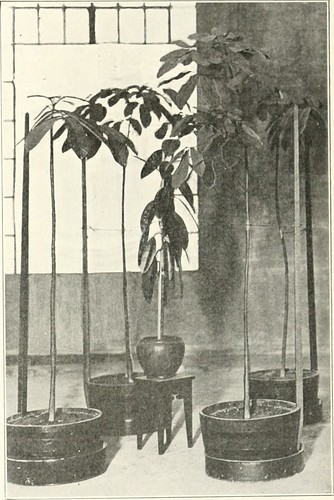
ky, with a capital of ,000 for the manufacture ofa patented automobile wheel. The principal incorporators areG. A. Simpson, of Ludlow, and Charles Schroeder, of Cincinnati.Ohio. Mahlow & Wyckhoff, manufacturers of hard rubber negativesand soft rubber molds, have recently removed from 325 SouthWarren street, Trenton, New Jersey, to Brunswick avenue, andEast Trenton Railroad, in the same city. The Thermoid 100 per cent. Perfect Brake Lining, made bytlie Thermoid Rubber Co., of Trenton, New Jersey, is now usedby twenty-six of the popular motor cars of the United Statesand Europe. THE HARTFORD RUBBER PLANTATION. Many ruljlier manufacturers here and abroad own rubber plan-tations situated somewhere in the tropics. It remains, however,for the Hartford Rubber Works to install their own idantationright in the factory. In the warm, light boiler room there aregrowing today healthy specimens of the Heiea Brasiliensis, Cas-lilliHi Elastica. and the ficus l-.hstica. So far, these trees have


Text Appearing After Image:
Rubber Plant.^tion of the Hartford Rubber Works Co. not been tapped, and will not be until a new tapping device pro-jected by Mr. Whittlesey is completed. Confidentially, the device is to be a cutting-knife attached to avacuum extractor which will draw the latex as far as the millroom, coagulate it over the mixing mills, and automatically feedit into the rolls for massing. Should be on every rubber mans desk—Crude Rubber andCompounding Ingredients: Rubber Country of the Amazon;Ruliber Trade Directorv of the World. 142 THE INDIA RUBBER WORLD [December 1, 1913. A CUSHION TIRE FOR MOTOR TRUCKS. AFTER considerable experimenting on the part of the manu-facturers, a solid rubber cushion truck tire has been pro-duced with the intention of meeting the adverse conditionsunder which motor trucks are operated. This same type of tirehas been used on electric pleasure cars for several years past, and


Note About Images
Please note that these images are extracted from scanned page images that may have been digitally enhanced for readability – coloration and appearance of these illustrations may not perfectly resemble the original work.


Read more about Cool Mould Manufacturing Factory images

Sunday, February 4, 2018

Cool China Tooling Factory images

(Posted from China Injection Mold blog)

A few nice china tooling factory images I found:


delighting “me” always
china tooling factory
Image by Shaojin+AT

delighting "me" always


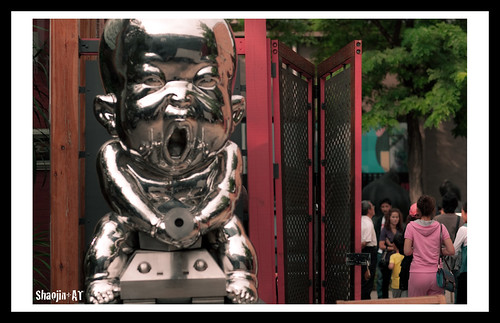
Picture: I suppose to focus my camera on the sculpture instead of on the pink lady. However, I was surprised when I got home with this result, my camera chosen to focus on pink lady! It is delighting me!!!


Canon, delighting you always…


Location: 798 Art Zone, Beijing. China


798 Art Zone (Chinese: 798艺术区; pinyin: 798 Yìshùqū), or Dashanzi Art District, is a part of Dashanzi in the Chaoyang District of Beijing that houses a thriving artistic community, among 50-year old decommissioned military factory buildings of unique architectural style. It is often compared with New York’s Greenwich Village or SoHo.

The area is often called the 798 Art District or Factory 798 although technically, Factory #798 is only one of several structures within a complex formerly known as Joint Factory 718. The buildings are located inside alleys number 2 and 4 on Jiǔxiānqiáo Lù (酒仙桥路), south of the Dàshānziqiáo flyover (大山子桥).


Construction


798 Space gallery, Jan,2009. Old Maoist slogans are visible on the ceiling arches.

The Dashanzi factory complex began as an extension of the "Socialist Unification Plan" of military-industrial cooperation between the Soviet Union and the newly formed People’s Republic of China. By 1951, 156 "joint factory" projects had been realized under that agreement, part of the Chinese government’s first Five-Year Plan. However the People’s Liberation Army still had a dire need of modern electronic components, which were produced in only two of the joint factories. The Russians were unwilling to undertake an additional project at the time, and suggested that the Chinese turn to East Germany from which much of the Soviet Union’s electronics equipment was imported. So at the request of then-Premier Zhou Enlai, scientists and engineers joined the first Chinese trade delegation to East Germany in 1951, visiting a dozen factories. The project was greenlighted in early 1952 and a Chinese preparatory group was sent to East Berlin to prepare design plans. This project, which was to be the largest by East Germany in China, was then informally known as Project #157.

The architectural plans were left to the Germans, who chose a functional Bauhaus-influenced design over the more ornamental Soviet style, triggering the first of many disputes between the German and Russian consultants on the project. The plans, where form follows function, called for large indoor spaces designed to let the maximum amount of natural light into the workplace. Arch-supported sections of the ceiling would curve upwards then fall diagonally along the high slanted banks or windows; this pattern would be repeated several times in the larger rooms, giving the roof its characteristic sawtooth-like appearance. Despite Beijing’s northern location, the windows were all to face north because the light from that direction would cast fewer shadows.

The chosen location was a 640,000 square metres area in Dashanzi, then a low-lying patch of farmland northeast of Beijing. The complex was to occupy 500,000 square metres, 370,000 of which were allocated to living quarters. It was officially named Joint Factory 718, following the Chinese government’s method of naming military factories starting with the number 7. Fully funded by the Chinese side, the initial budget was enormous for the times: 9 million rubles or approximately 140 million RMB (US million) at today’s rates; actual costs were 147 million RMB.

Ground was broken in April 1954. Construction was marked by disagreements between the Chinese, Soviet and German experts, which led at one point to a six-month postponement of the project. The Germans’ harshest critic was the Russian technology consultant in charge of Beijing’s two Soviet-built electronics factories (714 and 738), who was also head consultant of the Radio Industrial Office of the Second Ministry of Machine Building Industry. The disputes generally revolved around the Germans’ high but expensive quality standards for buildings and machines, which were called "over-engineering" by the Russians. Among such points of contention was the Germans’ insistence, historical seismic data in hand, that the buildings be built to withstand earthquakes of magnitude 8 on the Richter scale, whereas the Chinese and Russians wanted to settle for 7. Communications expert Wang Zheng, head of Communications Industry in the Chinese Ministry of National Defense and supporter the East German bid from the start, ruled in favor of the Germans for this particular factory.

At the height of the construction effort, more than 100 East German foreign experts worked on the project. The resources of as many as 22 of their factories supplied the construction; at the same time, supply delays were caused by the Soviet Red Army’s tremendous drain on East Germany’s industrial production. The equipment was transported directly through the Soviet Union via the Trans-Siberian railway, and a 15 km track of railroad between Beijing Railway Station and Dongjiao Station was built especially to service the factory. Caltech-educated scientist Dr. Luo Peilin (罗沛霖), formerly head of the preparatory group in 1951-1953, was Head Engineer of Joint Factory 718 during its construction phase. Dr. Luo, now retired in Beijing, is remembered by his former colleagues as a dedicated perfectionist whose commitment to the obstacle-strewn project was a major factor of its eventual success.

[edit]Operation


Joint Factory 718 began production in 1957, amid a grandiose opening ceremony and display of Communist brotherhood between China and East Germany, attended by high officials of both countries. The first director was Li Rui (李瑞), who had been involved in the early negotiations in Berlin.

The factory quickly established a reputation for itself as one of the best in China. Through its several danwei or "work units", it offered considerable social benefits to its 10,000-20,000 workers, especially considering the relative poverty of the country during such periods as the Great Leap Forward. The factory boasted, among others:

the best housing available to workers in Beijing, providing fully furnished rooms to whole families for less than 1/30 of the workers’ income;

diverse extracurricular activities such as social and sporting events, dancing, swimming, and training classes;

its own athletics, soccer, basketball and volleyball teams for men and women, ranked among the best in inter-factory competitions;

a brigade of German-made motorcycles, performing races and stunt demonstrations;

an orchestra that played not only revolutionary hymns, but also German-influenced classical Western music;

literary clubs and publications, and a library furnished with Chinese and foreign (German) books;

Jiuxianqiao hospital, featuring German equipment and offering the most advanced dental facilities in China.

The factory even had its own volunteer military reserves or jinweishi (近卫师), which numbered hundreds and were equipped with large-scale weapons and anti-aircraft guns.

Workers’ skills were honed by frequent personnel exchanges, internships and training in cooperation with East Germany. Different incentives kept motivation high, such as rewards systems and "model worker" distinctions. At the same time, political activities such as Maoism study workshops kept the workers in line with Communist Party of China doctrine. During the Cultural revolution, propaganda slogans for Mao Zedong Thought were painted on the ceiling arches in bright red characters (where they remain today at the latter tenants’ request).

Frequent VIP visits contributed to the festive atmosphere. Notable guests included Deng Xiaoping, Jiang Zemin, Liu Shaoqi, Zhu De, and Kim Il-Sung.

The Joint Factory produced a wide variety of military and civilian equipment. Civilian production included acoustic equipment for Beijing’s Workers’ Stadium and Great Hall of the People, as well as all the loudspeakers on Tiananmen Square and Chang’an Avenue. Military components were also exported to China’s Communist allies, and helped establish North Korea’s wireless electronics industry.


One of the old machine tools in front of some contemporary art in Dec 2005

After 10 years of operation, Joint Factory 718 was split into more manageable components, such as sub-Factories 706, 707, 751, 761, 797 and 798. The first Head of sub-Factory 798 (the largest) was Branch Party Secretary Fu Ke (傅克), who played a major role in recruiting skilled workers from southern China and among returned overseas Chinese.

However, the factory came under pressure during Deng Xiaoping’s reforms of the 1980s. Deprived of governmental support like many state-owned enterprises, it underwent a gradual decline and was eventually rendered obsolete. By the late 1980s and early 1990s, most sub-factories had ceased production, 60% of the workers had been laid off, and the remains of the management were reconstituted as a real-estate operation called "Seven-Star Huadian Science and Technology Group", charged with overseeing the industrial park and finding tenants for the abandoned buildings.

[edit]


The Dashanzi factory complex was vacated at around the time when most of Beijing’s contemporary artist community was looking for a new home. Avant-garde art being frowned upon by the government, the community had traditionally existed on the fringes of the city. From 1984 to 1993, they worked in run-down houses near the Old Summer Palace (Yuanmingyuan) in northwestern Beijing, until their eviction. They had then moved to the eastern Tongxian County (now Tongzhou District), more than an hour’s drive from the city center.

Then in 1995, Beijing’s Central Academy of Fine Arts (CAFA), looking for cheap, ample workshop space away from downtown, set up in the now defunct Factory 706. The temporary move became permanent and in 2000 Sui Jianguo(隋建国), Dean of the Department of Sculpture, located his own studio in the area. The cluttered sculpture workshops have always remained open for visitors to peek at the dozens of workers milling about.

In 2001, Texan Robert Bernell moved his Timezone 8 Art Books bookshop and publishing office (founded in 1997) into a former factory canteen; he was the first foreigner to move in. One of Timezone 8’s early employees was fashion designer Xiao Li, who along her husband, performance artist Cang Xin, helped artists secure and rent spaces in the area.

Through word-of-mouth, artists and designers started trickling in, attracted to the vast cathedral-like spaces. Despite the lack of any conscious aesthetic in the Bauhaus-inspired style, which grounded architectural beauty in practical, industrial function, the swooping arcs and soaring chimneys had an uplifting effect on modern eyes, a sort of post-industrial chic. At the artists’ requests, workers renovating the spaces preserved the prominent Maoist slogans on the arches, adding a touch of ironic "Mao kitsch" to the place.

Later that year, Mr. Tabata Yukihito from Japan’s Tokyo Gallery set up Beijing Tokyo Art Projects (BTAP, 北京东京艺术工程) inside a 400-m² division of Factory 798’s main area; this was the first renovated space featuring the high arched ceilings that would become synonymous with the Art District. BTAP’s 2002 opening exhibition "Beijing Afloat" (curator: Feng Boyi), drew a crowd of over 1,000 people and marked the beginning of the popular infatuation with the area.

In 2002, designer artist Huang Rui (黄锐) and hutong photographer Xu Yong (徐勇) set up the 798 Space gallery (时态空间) next to BTAP. With its cavernous 1200-m² floor and multiple-arched ceilings at the center of Factory 798, it was and still is the symbolic center of the whole district. (Huang and Xu since designed at least seven spaces in the area and became the prime movers and de facto spokespersons of the District.) A glass-fronted café was set up in the former office section at the back of the 798 space, opening into a back alley now lined with studios and restaurants such as Huang’s own At Café, and Cang Xin’s #6 Sichuan restaurant, the area’s "canteen".

In 2003, Lu Jie (卢杰) set up the Long March Foundation, an ongoing project for artistic re-interpretation of the historical Long March, inside the 25,000 Li Cultural Transmission Center (二万五千里文化传播中心). Around that time, Singapore-owned China Art Seasons (北京季节画廊) opened for display for pan-Asian art, and was one of several new galleries setting up at that time.


Source from: en.wikipedia.org/wiki/798_Art_Zone


Read more about Cool China Tooling Factory images

Tuesday, January 30, 2018

Cool Mould Produce Manufacturers images

(Posted from China Injection Mold blog)

Check out these mould produce manufacturers images:


Bedford CF V8 Custom Van 1986
mould produce manufacturers
Image by brizzle born and bred

My first attempt at building a custom was a CF van, way back in the 80’s. Phototaken by instant camera sold by Polaroid, the picture quality wasn’t great.


The custom van craze was very big back in the late 70s/early 80s & mine was typical of the style. You don’t see many of these about these days!


Retro Ride – My first custom van conversion – photo taken in Bristol 1986. first real V8 transplant I did. I always loved the CF as my all time favourite van. The Bedford CF van was the second most popular van in the UK, second only to the Ford Transit.


Started out as a standard Bedford CF short-wheelbase van cost about £200.


One of the first changes often done in the customizing field is to remove the stock motor and re-power the van with something bigger and better and rule of thumb is there’s no substitute for cubic inches.


Wow ..hear the sound of that engine.


To fit a V8 you’re looking at custom engine mounts and chopping the floor and bulkhead to make it fit.


Full Conversion Spec – 3.5 V8 Rover engine & Auto box. The Rover V8 engine is a compact V8 internal combustion engine with aluminium cylinder heads and cylinder block, originally designed by General Motors and later re-designed and produced by Rover in the United Kingdom.


It has been used in a wide range of vehicles from Rover and other manufacturers over several decades.


Black paint job with 1970s custom flames.


70s thrush sidepipes both sides.


Alloy Wheels with flared arches.


Engine back out again, and attention turned to the engine bay. The butchered bulkhead/tunnel area was uneccessarily close to the engine so this has been cut out further and refabricated.


All the various holes in the bulkhead were then welded/plated up, for a super-smooth engine bay, with only the bare essentials on show. The heater system is being redesigned from scratch, with a hidden intake inside the nearside wing.


Weber carbs


I decided to add a Jag diff & axles. The Jag IRS is the customisers choice, and has been for years, but may be a bit of overkill in this custom.


Full interior modifications inc captains swiveling seats – moulded rear side windows – custom moulded rear door – red velvet – draylon interior – full size double bed.


Sold the van in Gibraltar 1987 for about £2000.


Other Custom CF Bedford Vans


www.flickr.com/photos/38919941@N04/3975453149/


www.flickr.com/photos/triggerscarstuff/3871957988/


www.flickr.com/photos/38919941@N04/4570999924/


Read more about Cool Mould Produce Manufacturers images

Sunday, January 21, 2018

Cool Fitting Mould Maker images

(Posted from China Injection Mold blog)

A few nice fitting mould maker images I found:


memories of 1976
fitting mould maker
Image by brizzle born and bred
It saw the birth of punk and the death of Chairman Mao, it was a time when Britain was at its financial peak, even though the country was bailed out by the International Monetary Fund. THE SIZZLER OF ’76 – one of the hottest summers on record


1976 Inflation continues to be a problem around the world. Concorde enters service and cuts transatlantic flying time to 3 1/2 hours. One year after Microsoft is formed Apple is formed by Steve Jobs and Steve Wozniak. Nadia Comaneci scores the first ever perfect score in Gymnastics. In South Africa Riots in Soweto on June 16th mark the beginning of the end of apartheid. In music the first of the Punk Bands appear The Damned release New Rose classified as Punk Rock Music.


It was the year in which Harold Wilson resigned and Jimmy Carter became US President, a space probe landed on Mars. These were simpler times – fear of crime was low, people were less suspicious of others, and "traffic flowed freely and, by and large, British Rail was just wonderful".


There were fewer lager louts and it was safe to go out clubbing on a Saturday night. There was less pressure for children and teenagers to live up to their peers -‘keeping up with the Jones’. Children played in the parks and streets instead of becoming couch potatoes or computer geeks.


The economy was in desperate straits. The reservoirs were empty. The government was in danger of falling apart.


Youth unemployment was rising. And British sports people were preparing for an Olympic Games. There was a national water shortage, inflation reached 27 per cent, there were widespread strikes and the West Indies cricket team left us grovelling for mercy. Amid many strikes in public sectors, there was also raging inflation. Britain was forced into the humiliating position of asking international bankers to lend it billions of pounds, revealing the full scale of the economic failure the country was facing.


It was a turbulent time for Britain, we agreed to keep trawlers out of Icelandic waters after a third “Cod War”. In the heat of the summer, riots broke out at the Notting Hill carnival. 100 police officers were taken to hospital after they tried to break up rioters armed only with dustbin lids and milk crates. It was a good year for technology, for 1976 saw the first commercial Concorde flight, the unveiling of the first space shuttle, Enterprise, and the start-up of a new business, the Apple Computer Company, by Steve Jobs and Steve Wozniak. And Matsushita introduced the VHS home video cassette recorder to compete with Sony’s Betamax system.


Cost of Living


Strikes in public services were just something people had to deal with. The standard rate of tax stood at 35 pence in the pound. Inflation raged at around 17%. The industrial unrest and economic crisis led within a few years to the winter of discontent and then the Thatcher revolution. In terms of individual wealth, we were certainly poorer. The average wage was around £72 a week. Only half of us had phones – landlines, that is. No-one had a computer. Far fewer of us owned our own homes and it was much more difficult to get a mortgage. There was less crime and lower energy consumption because there were fewer cars and centrally-heated houses.


In terms of quality of life, only half the country had a telephone, no one had a computer and just over half of homes were owner-occupied compared with seven in 10 today. Our quality of life was improved by an affordable cost of living – petrol was 77p a gallon, a pint 32p and a loaf 19p – low crime levels and fewer cars on the road.


There was also a large investment in the public sector and a narrowing in the wage gap between the sexes. For the really wealthy there was a chance to travel on Concorde, which started flying from Heathrow to Bahrain that January. And for the rest of us we could book a seat on the first InterCity 125 trains or save up for one of the new Ford Fiestas or Mark IV Cortinas, costing £1,950. It was also the year of the Ford Fiesta, Rover SD1, Ford IV Cortina and the Hyundai Pony.


There was less traffic on British roads in 1976, but far more people were killed on them – more than 6,000 deaths compared to fewer than 2,500 annually now. Cars now have better brakes, airbags, side-impact bars and drivers are less likely to be drunk and it is now illegal not to wear seatbelts, even in the back. It was actually far more risky to be a child cycling round 1970s Britain than it is today and greatly more dangerous to be a child passenger in a car.


In 1976 we earned less money and we paid more tax (the basic rate then was 35 per cent rising to a pip-squeaking 83 per cent on earnings over £20,000 (about £110,000 today) and things largely cost far more than they do now. Travel abroad was still something of a luxury (currency restrictions were still in place meaning it was hard even if you had the cash) and largely restricted to the middle classes and above, although the era of the cheap package to Spain and elsewhere was beginning. Things that we think of as essentials – televisions, stereos, kitchen white goods and so forth were hugely expensive. In the mid-1970s a colour television cost two months’ salary; today, like all electronic goods prices have dropped in real terms by 80 per cent or more.


Far fewer of us owned our own homes and it was much more difficult to get a mortgage. Interest rates hit a whopping 15 per cent in October. Yet despite all this the new study, the first-ever global snapshot of quality of life over time, reckons 1976 was a golden year for Britain.


Clothes, travel and eating out were all significantly dearer back then, but university education (free, and you got a maintenance grant as well), public transport and some basic foodstuffs were cheaper. Petrol was cheaper too, although not by as much as we usually think. Adjusting for inflation, a litre of four-star in 1976 cost about 89p (£4 a gallon) but adjusting, again, for earning power (how much people actually had to spend on things like petrol) the real cost of motoring has fallen quite dramatically in the last four decades. As to the price of cars themselves, in 1976 a new, mid-range Ford Cortina cost around £18,000 in today’s money compared to about £16,500 for a Ford Focus in 2012).


The major dent in our finances today is not the cost of petrol but the ludicrous price of housing, especially in South-East England. In 1976 even the wealthiest parts of London contained a number of lower-income householders; there were bits of Chelsea and Kensington that were actually quite shabby. Now, the most desirable parts of the Capital (some wards now have average house prices over the £2m mark) have become effectively sterilised by money, with housing so expensive that only offshore trusts, crooks and oligarchs can afford to buy it. But this is a local phenomenon; across much of England, Wales and Scotland housing is still relatively affordable.


In most measurable ways things were no better in 1976, and in many ways worse, than they are now. We were poorer, paid more tax and most things cost more. We died sooner, smoked more and suffered more illness. We were less likely to be burgled, take drugs or have our car broken into but no less likely to be murdered, raped or robbed. And we mustn’t forget that in 1976 large sections of the population really were dramatically worse off than they are now. This was an era of casual racism and sexism, where women, gays, blacks and Asians could be openly discriminated against, where snobbery was still rife and where police corruption was so serious and widespread that 400 Metropolitan Police officers had to be quietly sacked.


But what we are REALLY nostalgic for, of course, is not the weather, the clothes or the alleged freedom but our youth. And that we can never get back.


Sport


And in sport, it was hardly a year of triumph to be cherished as a golden era. On the cricket field England were walloped by Australia and the West Indies. Our much vaunted athletics team at the Montreal Olympics came back with just one bronze medal between them.


Only dashing racing driver James Hunt saved the day somewhat by winning the Formula One championship. Lawrie McMenemy’s second division underdogs Southampton beat Manchester United 1-0 to win the FA Cup. This was one of the biggest upsets in cup history.


Highlights included one of the hottest summers on record, the Montreal summer Olympics, and John Curry winning a gold medal for ice-skating in the winter Games. Southampton won the FA Cup. Other sporting triumphs in 76 came from British figure skater John Curry, who won Olympic gold in Innsbruck, and on the cricket field England we were walloped 3-0 by the West Indies and our much-vaunted athletics team at the Montreal Olympics came back with a single bronze, won in the 10,000 metres by Brendan Foster.


Music


It was also the year that, for many, the music died, with Abba and Elton John being elbowed aside by the rude young men of pop, including the Sex Pistols and the Clash. Fears of a younger generation with a safety pin through its nose stalked society; what punk might do to the country was a serious concern for many – not least the punks themselves. Punk rock group The Ramones released their first album, U2 got together and the Brotherhood of Man won the Eurovision Song Contest with Save Your Kisses for Me.


Top selling singles of the year were ABBA with Dancing Queen, Queen with Bohemian Rhapsody – whose video more or less changed the face of pop music – and Chicago with If You Leave Me Now. Many outdoor festivals and shows were held in the U.S. as it celebrated its bicentennial – Elton John, The Eagles, Fleetwood Mac, Lynyrd Skynyrd and ZZ Top all drew huge crowds. Music fans bought Dancing Queen by Abba or Forever and Ever by Demis Roussos.


Meanwhile the Stones were in full flow, with a 33-year-old Mick Jagger and Keith Richards, both now 69, playing in front of a reported 200,000 at Knebworth Fair. The band are still on the road, packing out Hyde Park and Glastonbury 37 years on. In the charts Brotherhood of Man’s Eurovision winner Save All Your Kisses For Me and The Wurzels’ Combine Harvester were firm favourites.


Classic albums Hotel California by the Eagles and Stevie Wonder’s Songs in the Key of Life were released in 76 but there were signs of a shift in musical tastes.


A shocked nation saw the Sex Pistols’ foul-mouthed TV interview with Bill Grundy and The Damned released New Rose, widely regarded as the first punk single. Some saw punk as the death of pop but to others it was bringing music back to life while raising two fingers to the establishment.


Sex Pistols swear on live TV 1976


Punk rock band the Sex Pistols achieve public notoriety as they unleash several swearwords live on Bill Grundy’s TV show, following the release of their debut single Anarchy in the U.K. on 26 November.


Punk group The Sex Pistols cause a storm of controversy and outrage in the UK by swearing well before the watershed on the regional Thames Television news programme Today, hosted by Bill Grundy. Grundy, who has goaded them into doing so, is temporarily sacked. Today is replaced by Thames at Six a year later.


www.youtube.com/watch?v=R0IAYFh0CaI


Film & Television


Filming began on George Lucas’ first Star Wars film. Among the films released that year were Sylvester Stallone’s Rocky, the original Freaky Friday, starring Jodie Foster, and John Wayne’s final film, The Shootist.


On television, we were watching The Muppets, Starsky And Hutch and The Multi-Coloured Swap Shop, The Muppet Show, Starsky and Hutch. At the cinema, Sylvester Stallone captured everyone’s heart as gutsy boxer Rocky and the film clinched the best picture Oscar. But perhaps the most chilling performance of the year came Robert De Niro as Travis Bickle in Martin Scorsese’s Taxi Driver. On TV wheeler dealer Mike Baldwin, played by Johnny Briggs, started his 30-year stint on Coronation Street.


THE SIZZLER OF ’76 – one of the hottest summers on record


Many people fondly remember the year when the mercury topped 28C (82F) for a record-breaking 22 days… and for once the nostalgia is not misplaced.


It was the driest summer since 1772 so hours of sunny outdoor fun made 1976 a favourite. It’s the weather that stands out in most people’s memories. Day after day of temperatures in the 90s, as people rolled up their flared trousers to sunbathe in the park. That had its downside, of course, with a drought leading to scorched earth and hundreds of thousands of people dependent on standpipes for their water supply. There was even a Minister of Drought, Denis Howell, who within days of his appointment became Minister of Floods, as the heavens opened.


Henry Kelly, who was on the radio even then, recalls the heatwave: "As a radio reporter I covered the old chestnut of a man frying eggs on the pavement near Oxford Circus."


With the sunny weather here at last, We turn back the clock to the now legendary summer of 1976 – a year when the heat was really on Rationed: With water supplies running dry, many families had to rely on standpipes Heatwave: During the long, dry summer of 1976, even the mighty Chew Valley Reservoir virtually dried up AFTER basking in the sun for the last couple of weeks, let’s hope we can look forward, with the help of a little global warming, to some long, hot summer days.


We’re certainly due them after a dismal winter and cold spring. But how many readers, I wonder, recall the record-breaking long, hot summer of 1976, now an unbelievable 30 years ago? If you do, you’ll have memories of what a summer should really be like, with day after day of unbroken sunshine and temperatures in the 80s and 90s. Weathermen said that it was the hottest year overall since 1826, though it was just a little cooler in the West. But Bristol certainly had the hottest June on record. Readers of the Post were asked to ‘cool it’ as ice cream was rationed, kids stripped off and jumped into the pool in front of the Council House and tempers became frayed. The outdoor swimming pools, like Portishead and the old Clifton Lido, came into their own and shops reported shortages of suntan oil and sunglasses.


Wildlife had a field day, with a plague of ladybirds descending on the seafronts at Clevedon and Weston-super-Mare. The local authorities started spreading sand on the roads to stop the tar from melting (which didn’t work) and the water authorities became so stretched that they considered bringing in extra supplies to Avonmouth from Norway. Pupils at Winterbourne school were forced to attend lessons as the temperature topped 37.8 degrees in the classroom. But in more sensible Somerset, some children started school at 8am and finished at 1pm – missing at least some of the heat of the day. Despite constant warnings, youngsters just couldn’t be stopped from diving into the area’s many rivers and watercourses to cool off. More dangerously, many Bristol people started jumping into the icy, deep waters of the docks.


By the end of June it was official – Bristol was England’s hottest spot, with a temperature of 91F (33C). By this time many people had had enough of the heat – but amazingly it just went on and on, right throughout July and August. With temperatures at night remaining very high (63 degrees) people found that they couldn’t sleep. In fact, you could still feel the heat wafting off the pavements at midnight. The weathermen tell us that it did rain, but amounts were very small, and soon drought conditions set in.


Then, after over a month without rain, the brewery draymen went on strike – so we soon had beer rationing as well as water rationing to add to our misery. A hosepipe ban was implemented and the washing of cars was outlawed. There was much goverment advice on water-use, including the suggestion that only five inches of water was to be used in a bath, and that baths, it was daringly suggested, should be shared). A minister for drought, Denis Howell, was appointed. Just to prove he meant business a hastily conceived Drought Bill, implemented on July 14, allowed for fines of up to £400 for water misuse.


On June 28, the record for the hottest June day was broken when 32.8C (91F) was recorded. August was a record month with an amazing 264 hours of sunshine – more than eight hours a day. But not everyone lapped up the sun. There were casualties. In July, a local woman died from hyperpyrexia – caused by not drinking enough water or having enough salt in hot weather. It was something usually restricted to countries with very hot climates. Wildlife suffered, too. Thousands of salmon and trout died in the region’s rivers as the water became starved of oxygen. Many trees, especially those which had just started to recover from Dutch elm disease – started to wilt and die. Dust clouds covered the land as firemen strugled to cope with up to 20 grass-fires a day. In the Cotswolds, so-called dust-devils were reported.


These were small whirlwinds which only occur on fine, hot days. Brooks and springs which had never been known to dry up, even in the hottest weather, did just that and bowling greens and golf courses closed their doors to members as their ‘greens’ turned to ‘browns’. Water was being lost by evaporation from the Mendip reservoirs at an alarming rate – nearly six million litres a day throughout August. The level in the vast Chew Valley reservoir fell so low that visitors could actually walk on the exposed baked earth and make out the old road bridges and skeletal remains of long-since drowned farms.


As temperatures stayed in the 90s, many country areas came to rely on standpipes and buckets of water. Some, with very limited supply, or even none at all, had water delivered by tanker. Finally, on August 28, the worst drought since 1921 came to an end with violent storms and flooding. Strangely, many people stood at their back doors and welcomed the rain back with open arms.


www.youtube.com/watch?v=qRk_Oc_PjAI


1976 The Murders of the Yorkshire Ripper


20 January – 42-year-old married woman Emily Jackson is stabbed to death in Leeds; it is revealed that she was a part-time prostitute. Police believe she may have been killed by the same man who murdered Wilma McCann in the city three months ago.


Sutcliffe’s assaults on Rogulsky, Smelt and Tracey Browne were puzzling random attacks on women but not regarded in the same mould as the murder of Wilma McCann in Leeds or indeed of Joan Harrison in Preston. Wilma’s killing was the first linked Ripper murder and was probably motivated by Tracey’s desire to rob her, a prostitute nearly at home after a night on the town, with extreme violence, rather than a planned commencement of a series of ritual murders. Harrison was also robbed.


‘The well-described stocky bearded Irishman seen with Emily Jackson was never traced. Mrs Jackson was never seen alive again and her van lay parked in the Gaiety car park to which she never returned. This man was always believed to be her killer by the police and his description is quite different to Peter Sutcliffe. This man or a similarly described man was observed at the scene of two subsequent Ripper murders. These fact along with many others shows that Peter Sutcliffe didn’t commit the murder of Emily Jackson.’


9 May – 20-year-old Leeds prostitute Marcella Claxton is badly injured in a hammer attack.


Marcella Claxton, aged 20, and a prostitute, was attacked in Leeds in the early hours of Sunday, May 9 1976. The police did not link the attack to the Yorkshire Ripper series, though they did re-examine the file after the next murder in February 1977.


1976 Timeline


January – Korean cars are officially imported to the United Kingdom for the first time, as Hyundai launches its Pony family saloon on the British market.


2 January – Hurricane-force winds of up to 105 mph kill 22 people across Britain and cause millions of pounds worth of damage to buildings and vehicles.


5 January – Ten Protestant men are killed in the Kingsmill massacre at South Armagh, Northern Ireland, by members of the Provisional Irish Republican Army, using the cover name "South Armagh Republican Action Force".


7 January – Cod War: British and Icelandic ships clash at sea.


18 January – The Scottish Labour Party is formed.


20 January – 42-year-old married woman Emily Jackson is stabbed to death in Leeds; it is revealed that she was a part-time prostitute. Police believe she may have been killed by the same man who murdered Wilma McCann in the city three months ago.


21 January – The first commercial Concorde flight takes off.


29 January – Twelve Provisional Irish Republican Army bombs explode in London’s West End.


2 February – The Queen opens the new National Exhibition Centre in Birmingham, situated near the city’s airport.


4–15 February – Great Britain and Northern Ireland compete at the Winter Olympics in Innsbruck, Austria, and win one gold medal.


11 February – John Curry becomes Britain’s first gold medalist in skating at the Winter Olympics.


19 February – Iceland breaks off diplomatic relations with Britain over the Cod War.


March – Production of the Hillman Imp ends after 13 years. It is due to be replaced next year by a three-door hatchback based on a shortened Avenger floorpan.


1 March – Merlyn Rees ends Special Category Status for those sentenced for crimes relating to the civil violence in Northern Ireland.


4 March – The Maguire Seven are found guilty of the offence of possessing explosives and subsequently jailed for 14 years.


6 March – EMI Records reissues all 22 previously released British Beatles singles, plus a new single of the classic "Yesterday". All 23 singles hit the UK charts at the same time.


7 March – A wax likeness of Elton John is put on display in London’s Madame Tussaud’s Wax Museum.


The Northern Ireland Constitutional Convention is formally dissolved in Northern Ireland resulting in direct rule of Northern Ireland from London via the British parliament.


9 March – The Who’s Keith Moon collapses on stage ten minutes into a performance at the Boston Garden.


16 March – Harold Wilson announces his resignation as Prime Minister of the United Kingdom, to take effect on 5 April.


19 March – Princess Margaret and Lord Snowdon announce that they are to separate after 16 years of marriage.


26 March – Anita Roddick opens the first branch of The Body Shop in Brighton.


3 April – The United Kingdom wins the Eurovision Song Contest for the third time with the song "Save Your Kisses for Me", sung by Brotherhood of Man. It remains one of the biggest-selling Eurovision songs ever.


5 April – James Callaghan becomes Prime Minister of the United Kingdom upon the retirement of Harold Wilson, defeating Roy Jenkins and Michael Foot in the leadership contest. Callaghan, 64, was previously Foreign Secretary and had served as a chancellor and later Home Secretary under Wilson in government from 1964 until 1970.


7 April – Cabinet minister John Stonehouse resigns from the Labour Party leaving the Government without a majority in the House of Commons.


9 April – Young Liberals president Peter Hain is cleared of stealing £490 from a branch of Barclays Bank.


26 April – Comedy actor and Carry On star Sid James dies on stage at the Sunderland Empire Theatre having suffered a fatal heart attack.


1 May – Southampton F.C. win the first major trophy of their 91-year history when a goal from Bobby Stokes gives the Football League Second Division club a surprise 1-0 win over Manchester United in the FA Cup Final at Wembley Stadium.


3 May – Paul McCartney and Wings start their Wings over America Tour in Fort Worth, Texas. This is the first time McCartney has performed in the US since The Beatles’ last concert in 1966 at Candlestick Park.


4 May – Liverpool F.C. clinch their ninth Football League title with a 3-1 away win over relegated Wolverhampton Wanderers, fighting off a close challenge from underdogs Queen’s Park Rangers.


6 May – Local council elections produce disappointing results for the Labour Party, who won just 15 seats and lost 829 that they had held, compared to the Conservatives who won 1,044 new seats and lost a mere 22. This setback came despite the party enjoying a narrow lead in the opinion polls under new leader James Callaghan.


9 May – 20-year-old Leeds prostitute Marcella Claxton is badly injured in a hammer attack.


10 May – Jeremy Thorpe resigns as leader of the Liberal party.


19 May – Liverpool win the UEFA Cup for the second time by completing a 4-3 aggregate victory over the Belgian side Club Brugge K.V.


20 May – Rolling Stones guitarist Keith Richards is involved in a car accident. Cocaine is found in his wrecked car. Richards is given a court date of 12 January 1977.


27 May – Harold Wilson’s Resignation Honours List is published. It controversially awards honours to many wealthy businessmen, and comes to be known satirically as the "Lavender List".


June – British Leyland launches its innovative new Rover SD1, a large five-door hatchback that replaces the ageing P6 series.


1 June – UK and Iceland end the Cod War.


14 June – The trial for murder of Donald Neilson, known as the "Black Panther", begins at Oxford Crown Court.


22 June–16 July – Heat wave reaches its peak with the temperature attaining 26.7°C (80°F) every day of this period. For 15 consecutive days, 23 June–7 July inclusive, it reaches 32.2°C (90°F) somewhere in England; and five days – the first being 26 June – see the temperature exceed 35°C (95°F). This is contributing to the worst drought in the United Kingdom since the 1720s.


28 June – In the heat wave, the temperature reaches 35.6°C (96.1°F) in Southampton, the highest recorded for June in the UK.


29 June – The Seychelles become independent of the UK.


2 July – Benjamin Britten is created Baron Britten of Aldeburgh in the County of Suffolk, less than six months before his death.


3 July – Heat wave peaks with temperatures reaching 35.9°C (96.6°F) in Cheltenham.


7 July – David Steel is elected as new leader of the Liberal Party.


10 July – Three British and one American mercenaries are shot by firing squad in Angola.


14 July – Ford launches a new small three-door hatchback, the Fiesta – its first front-wheel drive transverse engined production model – which is similar in concept to the Vauxhall Chevette and German car maker Volkswagen’s new Polo. It will be built in several factories across Europe, including the Dagenham plant in Essex (where 3,000 jobs will be created), and continental sales begin later this year, although it will not go on sale in Britain until January 1977.


17 July–1 August – Great Britain and Northern Ireland compete at the Olympics in Montreal, Canada, and win 3 gold, 5 silver and 5 bronze medals.


21 July – Christopher Ewart-Biggs, the UK ambassador to Ireland, and a civil servant, Judith Cooke, are killed by a landmine at Sandyford, Co. Dublin.


22 July – Dangerous Wild Animals Act requires licences for the keeping of certain animals in captivity.


27 July – United Kingdom breaks diplomatic relations with Uganda.


29 July – A fire destroys the pier head at Southend Pier.

August – Drought at its most severe. Parts of South West England go for 45 days with no rain in July and August.


Government and Trades Union Congress agree a more severe Stage II one-year limit on pay rises.


5 August – The Great Clock of Westminster (or Big Ben) suffers internal damage and stops running for over nine months.


6 August – The last Postmaster General, John Stonehouse, is sentenced to seven years in jail for fraud.


14 August – 10,000 Protestant and Catholic women demonstrate for peace in Northern Ireland.


30 August – 100 police officers and 60 carnival-goers are injured during riots at the Notting Hill Carnival.


September – Chrysler Europe abandons the 69-year-old Hillman marque for its British-built cars and adopts the Chrysler name for the entire range.


1 September – Drought measures introduced in Yorkshire.


3 September – Riot at Hull Prison ends.


4 September – Peace March in Derry attracts 25,000 people in a call to end violence in Northern Ireland.


9 September – The Royal Shakespeare Company opens a memorable production of Shakespeare’s Macbeth at The Other Place, Stratford-upon-Avon, with Ian McKellen and Judi Dench in the lead roles, directed by Trevor Nunn.


12 September – Portsmouth football club, who were FA Cup winners in 1939 and league champions in 1949 and 1950 but are now in the Football League Third Division, are reported to be on the brink of bankruptcy with huge debts.


20 September & 21 September – 100 Club Punk Festival, the first international punk festival is held in London. Siouxsie and the Banshees play their first concert.


23 September – A fire on the destroyer HMS Glasgow while being fitted out at Swan Hunter’ yard at Wallsend on Tyne kills eight men.


29 September – The Ford Cortina Mark IV is launched.


4 October – InterCity 125 trains are introduced on British Rail between London and Bristol.


8 October – The Sex Pistols sign a contract with EMI Records.


15 October – Two members of the Ulster Defence Regiment jailed for 35 years for murder of the members of the Republic of Ireland cabaret performers Miami Showband.


22 October – The Damned release New Rose, the first ever single marketed as "punk rock".


24 October – Racing driver James Hunt becomes Formula One world champion.


25 October – Opening of the Royal National Theatre on the South Bank in London, in premises designed by Sir Denys Lasdun.


29 October – Opening of Selby Coalfield.


16 November – The seven perpetrators of an £8 million van robbery at the Bank of America in Mayfair are sentenced to a total of 100 years in jail.


1 December – Punk rock band the Sex Pistols achieve public notoriety as they unleash several swearwords live on Bill Grundy’s TV show, following the release of their debut single Anarchy in the U.K. on 26 November.


10 December – Betty Williams and Mairead Corrigan win the Nobel Peace Prize.


15 December – Denis Healey announces to Parliament that he has successfully negotiated a £2.3 billion loan for Britain from the International Monetary Fund on condition that £2.5 billion is cut from public expenditure: the NHS, education and social benefit sectors are not affected by these cuts.


Inflation stands at 16.5% – lower than last year’s level, but still one of the highest since records began in 1750. However, at one stage during this year inflation exceeded 24%.


Opening of Rutland Water, the largest reservoir in England by surface area (1,212 hectares (2,995 acres)).


First purpose-built (Thai style) Buddhist temple built in Britain, the Wat Buddhapadipa in Wimbledon, London.


Television


3 April – The 21st Eurovision Song Contest is won by Brotherhood of Man, representing the United Kingdom, with their song "Save Your Kisses for Me".


5 April – Patricia Phoenix returns to the role of Elsie Tanner on Coronation Street after an absence of three years.


7 April – Margot Bryant makes her last appearance as Minnie Caldwell on Coronation Street.


1 July – US Sci-Fi series The Bionic Woman makes its debut at No.1 in the ratings – an almost unheard of event for a Sci-Fi series.


1 December – Punk group The Sex Pistols cause a storm of controversy and outrage in the UK by swearing well before the watershed on the regional Thames Television news programme Today, hosted by Bill Grundy. Grundy, who has goaded them into doing so, is temporarily sacked. Today is replaced by Thames at Six a year later.


Dennis Potter’s Play for Today Brimstone and Treacle is pulled from transmission on BBC1 due to controversy over its content, including the rape of a woman by the devil. It is eventually screened on BBC2 in 1987, after having been made into a film starring Sting in 1982.


BBC1


6 January – Rentaghost (1976–1984)

8 January – When the Boat Comes In (1976–1981)

8 September – The Fall and Rise of Reginald Perrin (1976–1979)

2 October – Multi-Coloured Swap Shop (1976–1982)


BBC2


17 February – One Man and His Dog (1976–present)

20 February – Open All Hours (BBC2 1976, BBC1 1981–1982, 1985, 2013)


ITV


1 July – The Bionic Woman (1976–1978, 2007)

1 September – Star Maidens (1976)

6 September – George and Mildred (1976–1979)

27 September – The Muppet Show (1976–1981)

Chorlton and the Wheelies (1976–1979)

19 October – The New Avengers (1976–1977)


Music


This year saw the emergence of disco as a force to be reckoned with, a trend which would hold for the rest of the decade and peak in the last two years. This was also the year which truly established ABBA as the top selling act of the decade with them achieving their second, third and fourth number ones (as well as releasing the biggest-selling album of the year).


The ABBA formula was also replicated in the biggest-selling song of the year – the Eurovision-winning "Save Your Kisses for Me" by Brotherhood of Man, who began a three-year run in the UK charts from 1976. Other acts to achieve notable firsts were Elton John, who scored his first UK number one single this year (albeit as a duet with Kiki Dee), Showaddywaddy had their first and only number one and long-standing hit-maker Johnny Mathis also scored his biggest hit this year.


The album charts saw TV advertising become a major factor in changing the landscape of big sellers with non-regular singles artists achieving high sales with compilations. Among these were Slim Whitman, Bert Weedon, Glen Campbell and The Beach Boys, who remained at number one for ten consecutive weeks.


Also emerging this year was a new trend, which became known as punk rock. This was little evident on the charts as yet, and was more a lifestyle choice, but would become much more significant the following year, as many new acts who typified the trend came onto the scene.


Overall, 1976 is not considered a vintage year by music critics, with its overwhelming dominance by pop and MOR acts. Certainly, many consider 1976 to be the nadir of British music and hold the year’s charts up to be the very reason why Punk and New Wave music emerged with such force the following year.


Britain’s foremost classical composers of the late 20th century, including Sir William Walton, Benjamin Britten and Sir Michael Tippett, were still active. Sir Charles Groves conducted the Last Night of the Proms, and the soloist for "Rule Britannia" was contralto Anne Collins; the programme included Walton’s Portsmouth Point overture.


Number One singles


"Bohemian Rhapsody" – Queen

"Mamma Mia" – ABBA

"Forever and Ever" – Slik

"December, 1963 (Oh, What a Night)" – The Four Seasons

"I Love to Love (But My Baby Loves to Dance)" – Tina Charles

"Save Your Kisses for Me" – Brotherhood of Man

"Fernando" – ABBA

"No Charge" – J.J. Barrie

"The Combine Harvester (Brand New Key)" – The Wurzels

"You to Me Are Everything" – Real Thing

"The Roussos Phenomenon EP" – Demis Roussos

"Don’t Go Breaking My Heart" – Elton John and Kiki Dee

"Dancing Queen" – ABBA

"Mississippi" – Pussycat

"If You Leave Me Now" – Chicago

"Under the Moon of Love" – Showaddywaddy

"When a Child Is Born" – Johnny Mathis


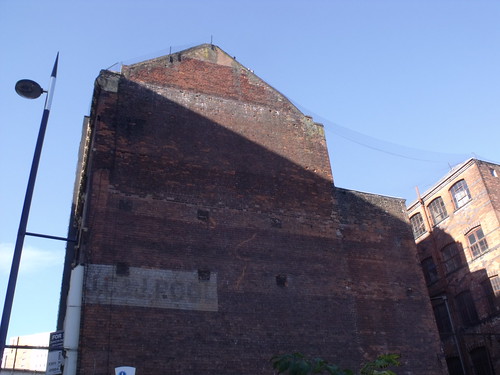
The side of William Powell & Sons, Carrs Lane – clear wall – “J C & J Pool” (Travelodge Carrs Lane site)
fitting mould maker
Image by ell brown

Almost didn’t get this update, but when I noticed that the steel girders had been removed, I knew that i had to get new shots. I even dropped my camera case on the ground (lucky that it is padded and the camera is ok).


Saw a drill in the middle of the site next to the former William Powell & Sons.


Wonder if a new building will go up here?


Now the steel frame has gone you can read the lettering "J C & J Pool".


Powell’s Gun Shop is a Grade II listed building.


Gun shop, workshops and living accomodation [now offices] of 1861, designed by Charles Edge [f.1827-1867].


MATERIALS: Red brick with diapered patterns in black brick and painted stone dressings.

PLAN: The street frontage is three storeys with attic and the rear, L-shaped workshop range has five floors.


EXTERIOR: The street front is rendered to the ground floor and first floor levels. The ground floor has three doorways at centre, right and left and between them are set shop windows. All of the openings have four-centred arches with deeply-incised hood moulds and label stops. The lower part of the shop windows are of C20 plate glass with modern fascia boards above, but the upper portions of the windows retain their two-light tracery and the surrounds are untouched. The left doorway has been converted to form a shop window and that to right leads to the staircase of the office chambers on the upper floors above the shops. The five first floor windows alternate between single and double-lights and have moulded surrounds and arched tympana beneath the black and red brick voussoirs. The piers between the windows have been encased in wooden panels. The four second floor windows are paired and have projecting figureheads to their tympana. Those to the third floor are sashes. A heavy cornice supports two gabled dormers with crow-stepped profile and polychromatic voussoirs to the relieving arches. The rear L-shaped workshop wing is of diapered brickwork with large windows above the work benches.


INTERIOR: The former central corridor which led to the rear courtyard has been incorporated and now forms a central arcaded colonnade, entered by the central door, to either side of which the shop interior can be reached. This has been largely re-fitted with replacement panelling to the walls and a suspended ceiling to the rear room at right. The offices are approached by an open-well staircase with stick balusters and shaped tread-ends. These upper floors retain their plan form relatively unaltered with two principal front rooms to each, although fireplaces have been removed. The architects drawings show these marked as drawing room etc. to first floor with bedrooms to the upper floors. The workshop wing at the back has ranges of large windows facing east and south and below these are work benches. There is a small forge to one room at first floor level.


HISTORY: The gun making industry in Birmingham was started in the C17 and expanded steadily through to the start of the C20. Firearms for the East India company and for slave traders were made in large numbers and guns for the army were a staple of the industry and led to the founding of the Government Viewing Room in 1798 and one of the two Proof Houses in the country for authorising guns. Powell’s trace their history to the partnership between William Powell and Joseph Simmons established in 1802 and were amongst the most prominent of the C19 gun makers. William Powell was elected Chairman of the Guardians of the Proof House where he also engaged Charles Edge to design the Proof Hole [proofing shed]. The firm made guns for the Napoleonic wars and for the American Civil War. They patented a number of inventions, including, in 1864, the Powell Snap Action and in 1866 a half-cocking mechanism.From 1861 William Powell gave his address as Carrs Lane, which implies that the acomodation was for his use. Gun-makers" did not usually manufacture the individual parts of their guns. Pieces were made by independent specialist sub-contractors. Some of these worked within the gun quarter and Showell’s Dictionary lists some fifty specialists. Assembly was done by "fabricators" or "setters-up" and the finished product was then sold by the "maker". It seems from the juxtaposition of shop and workshop at Carrs Lane that Powell’s assembled the guns themselves and then sold them through the shop, enabling them to better monitor the quality of the finished product.


SOURCES: Thomas T. Harman and Walter Showell, Showell’s Dictionary of Birmingham (1885); Andy Foster, Birmingham, Pevsner Architectural Guides (2005).


SUMMARY OF IMPORTANCE: This building was designed in 1860 by the noted Birmingham architect, Charles Edge, whose other listed buildings include the extension to Birmingham Town Hall [Grade I]. It houses a gun shop and associated workshops as well as accomodation [now office chambers] on the upper floors. The building has a good street front in a continental Gothic style which is little-altered, and a shop interior and accomodation which retain the essentials of their plan form. The juxtaposition of gun shop and associated workshops, where the parts made elsewhere were assembled, or "set-up" is rare and the degree of intactness in the workshop wing, with work benches and hearth still in situ, is remarkable. The building provides telling evidence of the specialist gun trade which was once such a vital part of Birmingham’s industry in the C19.


Powell’s Gun Shop – Heritage Gateway


Powell’s Gun Shop dates from 1860 – 61, a late work of Charles Edge in Italian Gothic. Four storeys and dormers, rendered below red brick with blue brick patterns above, stone dressings. The ground floor originally two shops with a central rear access, has four-centred arches. Above the window arrangement narrows on each suceeding floor, creating upward movement. Many sculpted heads. The first floor projections are recent. At the rear a narrow five-storey contemporary workshop wing.


From "Pevsner Architectural Guides: Birmingham" by Andy Foster


Another Travelodge hotel will be built here next door to the old Powell’s Gun Shop.


Read more about Cool Fitting Mould Maker images

Sunday, December 10, 2017

Cool Mold Chinese images

(Posted from China Injection Mold blog)

A few nice mold chinese images I found:


BK0021Y-Antique-Chinese-Ming-Cabinet
mold chinese
Image by Silk Road Collection

"The cabinet is designed in the classic Ming style-sleek, simple, and graceful. The medium-brown finish reveals the rosewood grains beautifully. The doors are attached by traditional wooden pegs. The molding and the legs are rounded and the front leg spandrels are slightly curved. Inside the cabinet are two ""finished"" storage areas and two drawers. The hardware is brass.

Two of these cabinets are currently available but can be sold separately. Price listed is for each cabinet."


Grass Mud Horse – a Maquette for Ai WeiWei
mold chinese
Image by melter

one finger salute from an empty Chinese handcuff. Cast iron base cast in green sand at Ox-bow in 2007, aluminum "finger" cast in 2012. Finger was cast in a burn out mold, using a bamboo Chinese handcuff (finger trap). You are only trapped if you resist in the way expected.


Leamington Spa Station – bridge on High Street in Leamington – Jordans Fireworks
mold chinese
Image by ell brown

This is Leamington Spa Station in Warwickshire.


I got here on a Chiltern Railways train from Solihull.


Was lucky that I had blue skys in Leamington, especially for an October day (have been having many blue sky days in October 2011).


The current Art Deco building was opened in 1939.


And is Grade II listed.


It was opened by the Great Western Railway to replace the original building of 1852.


The building was restored by 2008 by Chiltern Railways.


Grade II listing Leamington Spa Station, Including Attached Platform Structures, Royal Leamington Spa – British Listed Buildings


Main line station 1939 for Great Western Railway. Steel-framed sheathed in brick; faced with Portland stone above polished granite plinth; brick to rear/platform elevations. Flat roofs with parapet. Wooden sashes with stone architraves. Platform canopies steel girders with cast iron columns. Art Deco neo-classical style.

EXTERIOR: To forecourt, ENTRANCE RANGE of 3 storeys and 9 bays, LEFT RANGE of 2 storeys and 14 bays, and single storey RIGHT RANGE. ENTRANCE RANGE has advanced ground floor with granite plinth, rusticated Portland stone, and parapet. Main entrance has granite architrave, pair of glazed doors with side- and over-lights, horizontal mullions and ‘ENTRANCE’ in metal lettering flanked by three 6-over-9 sashes, all under glazed canopy. Above this, 5-part facade has central 3 bays defined by shallow pilasters with stepped vertical detailing, flanked by slightly taller and advanced single bay, then double end bays; all with 6-over-9 pane sashes to 1st floor, 3-over-6 pane sashes to 2nd floor, and projecting stepped cornice below parapet. ‘LEAMINGTON SPA STATION’ in sans serif lettering to parapet over central 3 bays. To right, single recessed bay blank above entrance. RIGHT RANGE has 1-storey subway entrance with 3 wide openings outlined in polished granite under 3 blind panels, inside walls canted to subway passage. LEFT RANGE has parapet roof above flat cornice, banded string course, and continuous polished granite plinth. Central bay advanced slightly with pair of 4-over-6 pane sashes above entrance with granite architrave. Two 6-over-9 sashes to otherwise mostly blank first floor, and 6-over-9 sashes to ground floor with secondary entrances to each end also within granite architraves. Far left is advanced with similar windows and door on return. Return elevations stone with brick to rear/platforms. INTERIOR: Booking Hall and subway tiled above granite plinth. Stairs to each platform with stick metal balusters, some wavy, and wooden handrails. Balustrade and newels at platform level have circular and wavy details.

PLATFORMS: 2 primary platforms ‘Down’ and ‘Up’ (to London), and 2 shorter platforms for stabling trains. The linear platform buildings have brick walls with granite plinth and cantilevered canopies edged with bargeboards and framed with steel girders springing from stone pilasters and stepped corbel blocks. Platform extends beyond the buildings where canopies are supported by paired cast-iron columns. Down platform has former telegraph room with wooden and glazed panelled entrance, waiting room, buffet, lavatories. Up platform has waiting room and service rooms. Wood framed glazed doors with metal mullions, handles and curved bars in a Deco style. Waiting rooms finished with wood architraves to doors and fixed pane with overlight windows to platforms, blocked fireplaces, coved and beamed ceilings, and fixed wooden bench seating. Buffet fully panelled with polished walnut, continuous bar similarly panelled below moulded edge, back bar; fireplace to north with mirror and panelled overmantle and fluted band to top. Lavatories with wooden doors and stone Deco style fireplaces. Some original benches with ‘GWR’ scrolled in supports on platforms.

HISTORY: This station replaced the 1853 Brunel station that was demolished in 1935, which had in turn replaced the large Georgian Eastnor Terrace.

SOURCES: Great Western Railway Magazine July 1937, December 1937, March 1940.

Royal Leamington Spa courier Nov. 13, 1936.


Took these as I was leaving Leamington.


Railway bridges under the station.


I would have got this bridge first, but I earlier went down Lower Avenue, so got it on the way back to the station.


Bridge on High Street in Leamington


Also passing under is Bath Street and Clemens Street.


A quick shot of Jordans Fireworks – not to long until this years Fireworks Night.


They sell Chinese Flying Lanterns and other fireworks types.


Read more about Cool Mold Chinese images