Saturday, July 29, 2017

Nice Tooling Factory photos

(Posted from China Injection Mold blog)

Some cool tooling factory images:


SLS Core Stage Production Continues for Rocket’s First Flight
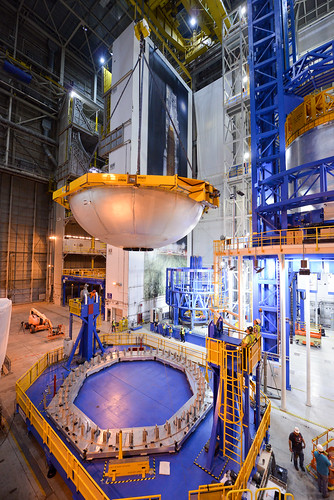
tooling factory
Image by NASA’s Marshall Space Flight Center

Throughout NASA’s 43-acre rocket factory, the Michoud Assembly Facility in New Orleans, engineers are building all five parts of the Space Launch System’s core stage. For the first SLS flight for deep space exploration with NASA’s Orion spacecraft, major structural manufacturing is complete on three parts: the forward skirt, the intertank and the engine section. Test articles, which are structurally similar to flight hardware, and are used to qualify the core stage for flight, are in various stages of production and testing.


“One of the most challenging parts of building the world’s most powerful rocket has been making the largest rocket stage ever manufactured for the first time,” said Steve Doering, the SLS stages manager at NASA’s Marshall Space Flight Center in Huntsville, Alabama. “The 212-foot-tall core stage is a new design made with innovative welding tools and techniques.”


To build the rocket’s fuel tanks, Boeing, the prime contractor for the SLS core stage, is joining some of the thickest parts ever built with self-reacting friction stir welding. NASA and Boeing engineers and materials scientists have scrutinized the weld confidence articles and developed new weld parameters for making the liquid oxygen and hydrogen tanks for the first SLS mission.


Image Credit: NASA/MSFC Michoud image: Judy Guidry


Read more


For more information about the Space Launch System


NASA Media Usage Guidelines


Crystal Mill
tooling factory
Image by Road Fun

Definitely a shot from the archive, this was originally a color slide taken when I was a child using a very simple camera. It may have been a Brownie. This and a couple of other slides were found amongst my mom’s belongings and I had them scanned to a CD. Originally in color, I feel this shot works better processed into sepia. At the time I felt the Mill was a very precarious structure but it seems it still stands today. This was not an easy place to visit and required some off roading in a rented Jeep. My father died when I was young and the fishing trip we took to Colorado one summer was the only major father-son event we got to enjoy together. A treasured memory forever.


According to Wikipedia:
The Crystal Mill, or the Old Mill in Crystal, Colorado in the United States, was actually not a mill in the sense of being a factory, but was instead a power generating station.

It did not generate electrical power, but rather used a water turbine to drive an air compressor. The compressed air was then used to power other machinery or tools.

Today it stands as a Colorado icon, and is reputed to be the most photographed site in the state.


Thanks as always for your visits, faves and more! Hope you all have a great Thursday. BTW, today is the Princess’s first day at her new preschool so there is excitement in the air 🙂


Read more about Nice Tooling Factory photos

Monday, July 24, 2017

Image from page 250 of "New life currents in China" (1919)

(Posted from China Injection Mold blog)

Some cool china plastic mold images:


Image from page 250 of “New life currents in China” (1919)
china plastic mold
Image by Internet Archive Book Images
Identifier: newlifecurrentsi00game
Title: New life currents in China
Year: 1919 (1910s)
Authors: Gamewell, Mary Louise Ninde, 1858-1947
Subjects: Missions — China China
Publisher: New York : Missionary Education Movement of the United States and Canada
Contributing Library: University of California Libraries
Digitizing Sponsor: MSN


View Book Page: Book Viewer
About This Book: Catalog Entry
View All Images: All Images From Book


Click here to view book online to see this illustration in context in a browseable online version of this book.


Text Appearing Before Image:
missionaries, though they may have lived long inChina, may understand the people well, and speakthe language fluently, are in the end still—foreigners. The Development of a Chinese Church The Conquering Church in China, I havecalled this chapter because that is the churchsmission and character, conquering and to conquer.It has many elements of strength; it has somedefects. But the church is young and because it isyoung it is plastic. God grant that in these criticaltimes, when, as a Chinese scholar expressed it, The atmosphere is aquiver with the spirit ofchange, the church may be set in the right mold I The trend of the church is more and more awayfrom foreign control and toward an independentorganization, self-supporting and self-governing.This is not because of a dislike for foreigners, butit springs from a conviction that the time has nowcome when the Chinese are in a position to moveforward and assume larger leadership. The callis for an indigenous church, not one imported; for


Text Appearing After Image:
A group of the clergy at the consecration of Bishop Tsae SengSing of the Anglican Church. This first Chinese bishop is theson of a clergyman and the father of three missionaries. THE CONQUERING CHURCH IN CHINA 205 a religious life adapted to the psychology of theFar East. Dr. C. Y. Cheng, Chinese Secretary ofthe China Continuation Committee, splendidlyvoiced the general thought in a paper he read lastsummer at a missionary conference. Christianityin China, he said, will become Chinese Chris-tianity. We are to present Jesus Christ to thepeople not as a Jewish Messiah, or a EuropeanChrist, but as a real Chinese Savior. There are in China a few congregations, of com-paratively recent date, known as the ChineseChristian Church. Some speak of them as the Independent Church. The Chinese say thisname is misleading inasmuch as foreigners are wel-comed in the councils of these churches in anadvisory capacity. Nor do they like another termsometimes used, the National Church, for as theleaders e


Note About Images
Please note that these images are extracted from scanned page images that may have been digitally enhanced for readability – coloration and appearance of these illustrations may not perfectly resemble the original work.


Read more about Image from page 250 of "New life currents in China" (1919)

Friday, July 21, 2017

Nice China Mould photos

(Posted from China Injection Mold blog)

Check out these china mould images:


NYC – Metropolitan Museum of Art: Armor for Man and Horse
china mould
Image by wallyg
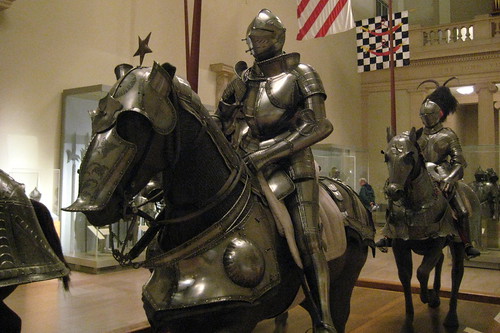
Armors for Man and Horse

Etched steel

Wolfgang Grosschedel (record 1517-1562)

German (Landshut), man’s armor around 1535, horse armor date 1554


Wolfgang Grosschedel was the most famous Landshut armorer of his generation. Included among his patrons were the Holy Roman Emperor and Philip II of Spain. These armors for man and horse constitute superb examples of Grosschedel’s work from different periods in his career.


The man’s armor, dating from about 1535, is stamped with Grosschedel’s personal mark and that of LAndshut. The etched decoration includes human figures and ornaments copied from engravings by the German printmaker Barthel Beham.


The horse armor, dated 1554, is complete and homogenous and though unmarked can be attributed to Grosschedel on stylistic grounds.


**


The collection of armor, edged weapons, and firearms in The Metropolitan Museum of Art ranks with those of the other great armories of the world, in Vienna, Madrid, Dresden, and Paris. It consists of approximately 15,000 objects that range in date from about 400 B.C. to the nineteenth century. Though Western Europe and Japan are the regions most strongly represented–the collection of more than five thousand pieces of Japanese armor and weapons is the finest outside Japan–the geographical range of the collection is extraordinary, with examples from the Near East, the Middle East, India, Central Asia, China, Southeast Asia, Indonesia, and North America. The Arms and Armor Galleries were renovated and reinstalled in 1991 to display to better effect the outstanding collection of armor and weapons of sculptural and ornamental beauty from around the world.


The Metropolitan Museum of Art‘s permanent collection contains more than two million works of art from around the world. It opened its doors on February 20, 1872, housed in a building located at 681 Fifth Avenue in New York City. Under their guidance of John Taylor Johnston and George Palmer Putnam, the Met’s holdings, initially consisting of a Roman stone sarcophagus and 174 mostly European paintings, quickly outgrew the available space. In 1873, occasioned by the Met’s purchase of the Cesnola Collection of Cypriot antiquities, the museum decamped from Fifth Avenue and took up residence at the Douglas Mansion on West 14th Street. However, these new accommodations were temporary; after negotiations with the city of New York, the Met acquired land on the east side of Central Park, where it built its permanent home, a red-brick Gothic Revival stone "mausoleum" designed by American architects Calvert Vaux and Jacob Wrey Mold. As of 2006, the Met measures almost a quarter mile long and occupies more than two million square feet, more than 20 times the size of the original 1880 building.


In 2007, the Metropolitan Museum of Art was ranked #17 on the AIA 150 America’s Favorite Architecture list.


The Metropolitan Museum of Art was designated a landmark by the New York City Landmarks Preservation Commission in 1967. The interior was designated in 1977.


National Historic Register #86003556


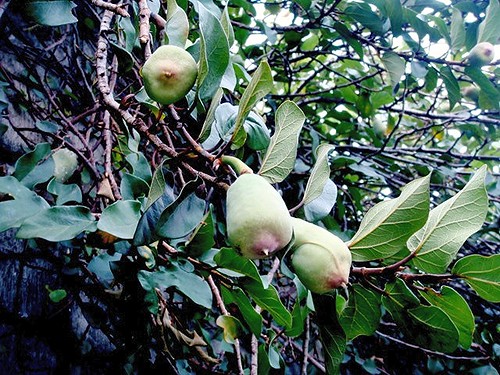
Ficus pumila L.
china mould
Image by Ahmad Fuad Morad

Kelana Jaya, Selangor, Malaysia.


Ficus pumila L. Moraceae. CN: [Malay – Ara jalar], Climbing fig, Creeping fig, Creeping rubberplant, Figvine. Native to China, Japan, Taiwan, Vietnam. Elsewhere cultivated as ornamental. Creeping fig is an enthusiastic climber able to scramble up vertical surfaces 3 and 4 stories tall with the aid of a powerful adhesive. This vine coats surfaces with a tracery of fine stems that are densely covered with small heart shaped leaves that are 1 inch long by about 2 cm wide, they are held closely to the surface creating a mat of foliage that extends barely 2.5 cm from the surface. These are the juvenile leaves. Once the vine has reach the top of its support if will begin to form horizontal branches on which adult foliage is borne. Adult leaves are held alternately in two rows along these branches. They are more leathery than the juveniles, and are dark green, and about 7.6 cm long by 5 cm wide. The fruit is a fig (a sycamore). These are borne only on the horizontal stems, they are pale green in color and about 7.6 cm long by 6.4 cm wide. Most experts warn against allowing the climbing fig to attach itself to your home, garage, or other valuable buildings. This winding vine will peel paint, pop screws, and otherwise wreak havoc on fences, buildings, and any other structure. It can also attract insects and mold that cause costly damage. Very invasive and difficult to eradicate. The seeds and other plant parts are poisonous.


Synonym(s):
Ficus awkeotsang Makino [Ficus pumila var. awkeotsang]
Ficus repens Rottler [Ficus pumila var. pumila]


Ref and suggested reading:
www.ars-grin.gov/cgi-bin/npgs/html/taxon.pl?16951
en.wikipedia.org/wiki/Ficus_pumila
www.bitterrootrestoration.com/medicinal-plants/creeping-f…


Read more about Nice China Mould photos

Sunday, July 16, 2017

Protecting the Environment with Bioplastic Injection Molding

(Posted from China Injection Mold blog)


Bio degradable material is the rage in today’s world where scarce resources are depleting fast due to the needs of a growing population. In such a scenario, China bioplastic injection molding has come up with a range of bioplastic injection molding products that have a host of advantages as far as the environment goes. Here is a list of things that make these products eco friendly and a delight to use!


Trees: The green cover or trees are the treasure of this planet. Sadly, we have been depleting and destroying our jungles and green cover in a bid to beautify our homes, create firewood, make buildings and a host of other things. The solution was to create something that would help in curbing the cutting of trees to bring this number down to a bare minimum. With bioplastic injection molding pieces which can be used to create a host of products from containers to furniture, one can actually put an end to the use of such destruction as far as natural reserves are concerned.


Toxicity: These bioplastic injection molding pieces are known to be produced with minimum amount of toxins. What does this mean for the environment? Quite simply, it means that you can actually go ahead and see it as an extension of nature because these products will not harm the nature by emitting toxins that one finds in ordinary plastic. You can use bioplastic containers to bury planters into the ground with saplings that will later sprout into trees, or you can use them near water bodies and to create trash cans as well, as they do not emit hazardous elements that will harm us or the environment in any way. This makes bioplastic a ‘breathable’ form of plastic.


Packaging: The food packaging industry has benefited greatly from the use of these kinds of products as the safety aspect is well taken care of. The packing and processing industry can easily make use of these bioplastic pieces that will keep food well preserved, safe, fresh and free of any toxins so that you actually end up ingesting something that is good for your health and free of substances that may be carcinogenic.


Switch to products made up of bioplastic injection molding with the techniques used by China biplastic injection molding so that you can actually get an eco friendly lifestyle which provides you with light weight and superior quality products as well!


To get more information kindly visit at our web link – http://www.china-casting.biz/bioplastics.html


For more related source- http://goo.gl/3OHCPe


To get more information kindly visit at our web link – http://www.china-casting.biz/bioplastics.html

For more related source- http://goo.gl/3OHCPe


Read more about Protecting the Environment with Bioplastic Injection Molding

Friday, July 14, 2017

Cool China Foam Mould images

(Posted from China Injection Mold blog)

Some cool china foam mould images:


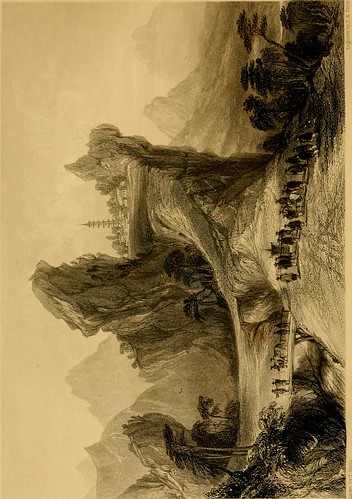
Image from page 13 of “China, in a series of views : displaying the scenery, architecture, and social habits of that ancient empire” (1843)
china foam mould
Image by Internet Archive Book Images
Identifier: chinainseriesofv3to4allo
Title: China, in a series of views : displaying the scenery, architecture, and social habits of that ancient empire
Year: 1843 (1840s)
Authors: Allom, Thomas, 1804-1872 Wright, G. N. (George Newenham), 1790?-1877, editor Fisher, Son, & Co., publisher
Subjects:
Publisher: London, Newgate Street Paris, rue St. Honoré : Fisher, Son, & Co.
Contributing Library: Getty Research Institute
Digitizing Sponsor: Getty Research Institute


View Book Page: Book Viewer
About This Book: Catalog Entry
View All Images: All Images From Book


Click here to view book online to see this illustration in context in a browseable online version of this book.


Text Appearing Before Image:
-, from the Outer Harbour 56 A Marriage Procession 58 Landing-place at tlie Yuk-shan ……….. 60 Silk Farms at Iloo-chow ………… 61 A Devotee consulting the Sticks of Fate 64 Great Temple at Honan 66 The Emperor Taou-kwang reviewing his Guard? …….. 67


Text Appearing After Image:
4 ^ -^ ^ -^ CHINA. THE WOO-TANG MOUNTAINS. PROVINCE OF KIANG-SI. The wild streams leap with headlong sweep,In their ciirbless course oer the mountain steep :All fresh and strong they foam along,Waking the rocks with their cataract song. The Recluse or the Rock. In the schistose district of the Meilung mountains, that engross the southern part ofKiang-si, the forms of the cliffs and the crags are more varied than art could ever havemade them, and than nature generally does. The goddess, however, in a sportive mood,seems to have moulded the amazingly diversified surface of the Woo-tang rocks, inwhich the Kan-kiang-ho has its source; for, the toppling position of the great mass thatoverhangs the village of Woo-tang and the vale of Nan-kang-foo, is obedient ratherto the strength of adhesion than the laws of gravit). An Alpine grandeur pervadesthe whole mountain chain to the north of the Meilung group; and the Chinese are soentirely devoted to pleasure, so much engrossed by superstition, s


Note About Images
Please note that these images are extracted from scanned page images that may have been digitally enhanced for readability – coloration and appearance of these illustrations may not perfectly resemble the original work.


Read more about Cool China Foam Mould images

Monday, July 10, 2017

Nice Tooling Factory photos

(Posted from China Injection Mold blog)

A few nice tooling factory images I found:


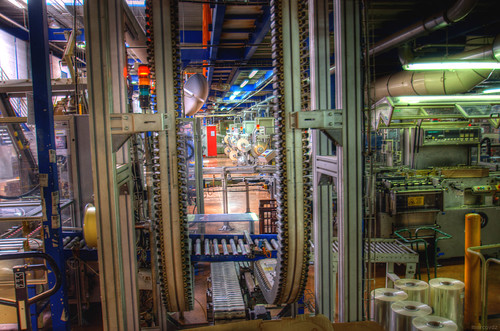
Factory
tooling factory
Image by marcovdz

Fralib Elephant tea Factory, Gémenos, France.


Swarovski Crystal Worlds – Kristallwelten Swarovski
tooling factory
Image by Cost3l
Facebook Costel Photography


Daniel Swarovski (October 24, 1862 – January 23, 1956), formerly Daniel Swartz, was born in northern Bohemia (now the Czech Republic). His father was a glass cutter who owned a small glass factory. It was there that a young Swarovski served an apprenticeship, becoming skilled in the art of glass-cutting. In 1892 he patented an electric cutting machine that facilitated the production of crystal glass.

In 1895, Swarovski financier Armand Kosman and Franz Weis founded the Swarovski company, originally known as A. Kosmann, Daniel Swartz & Co., which was later shortened to K.S. & Co. The company established a crystal cutting factory in Wattens, Tyrol (Austria), to take advantage of local hydroelectricity for the energy-intensive grinding processes Daniel Swarovski patented. The Swarovski Crystal range includes crystal glass sculptures and miniatures, jewelry and couture, home decor, and chandeliers.

All sculptures are marked with a logo. The original Swarovski logo was an edelweiss flower, which was replaced by an S.A.L. logo, which was finally replaced with the current swan logo in 1988. To create crystal glass that lets light refract in a rainbow spectrum, Swarovski coats some of its products with special metallic chemical coatings. For example, Aurora Borealis, or "AB", gives the surface a rainbow appearance.[8] Other coatings are named by the company, including Crystal Transmission, Volcano, Aurum, and Dorado. Coatings may be applied to only part of an object; others are coated twice, and thus are designated AB 2X, Dorado 2X etc.

In 2004 Swarovski released Xilion, a copyrighted cut designed to optimise the brilliance of Roses (components with flat backs) and Chatons (diamond cut). The Swarovski Group also includes Tyrolit (makers of abrasive and cutting tools); Swareflex (reflective and luminous road markings); Signity (synthetic and natural gemstones); and Swarovski Optik (optical instruments such as binoculars and rifle scopes).

The company runs a crystal-themed museum, Swarovski Kristallwelten (Crystal Worlds) at its original Wattens site (near Innsbruck, Tyrol, Austria). The Crystal Worlds centre is fronted by a glass-covered head, the mouth of which is a fountain. The glass-covered Crystal Worlds houses exhibitions related to, or inspired by, the crystals – but do not include explanations of how the famous designs are made, produced or finished. Swarovski work was recently exhibited at Asia’s Fashion Jewellery & Accessories Fair based on the concept of a single continuous beam of fragmented light travelling through a crystal. (Wikipedia)


factory tools
tooling factory
Image by bloomgal


Read more about Nice Tooling Factory photos